
Troubleshooting
Overview
Section titled “Overview”Troubleshooting in Rokks starts with scope and evidence. Most issues can be narrowed by checking environment, tenant, job status, source health, and the affected route family.
How it works
Section titled “How it works”The UI shows symptoms, but operations pages show causes. A missing dashboard may be a scope issue. A blank widget may be a query or metadata issue. A stale source may be a failed sync job. A notification issue may be an alert evaluation or external channel issue.
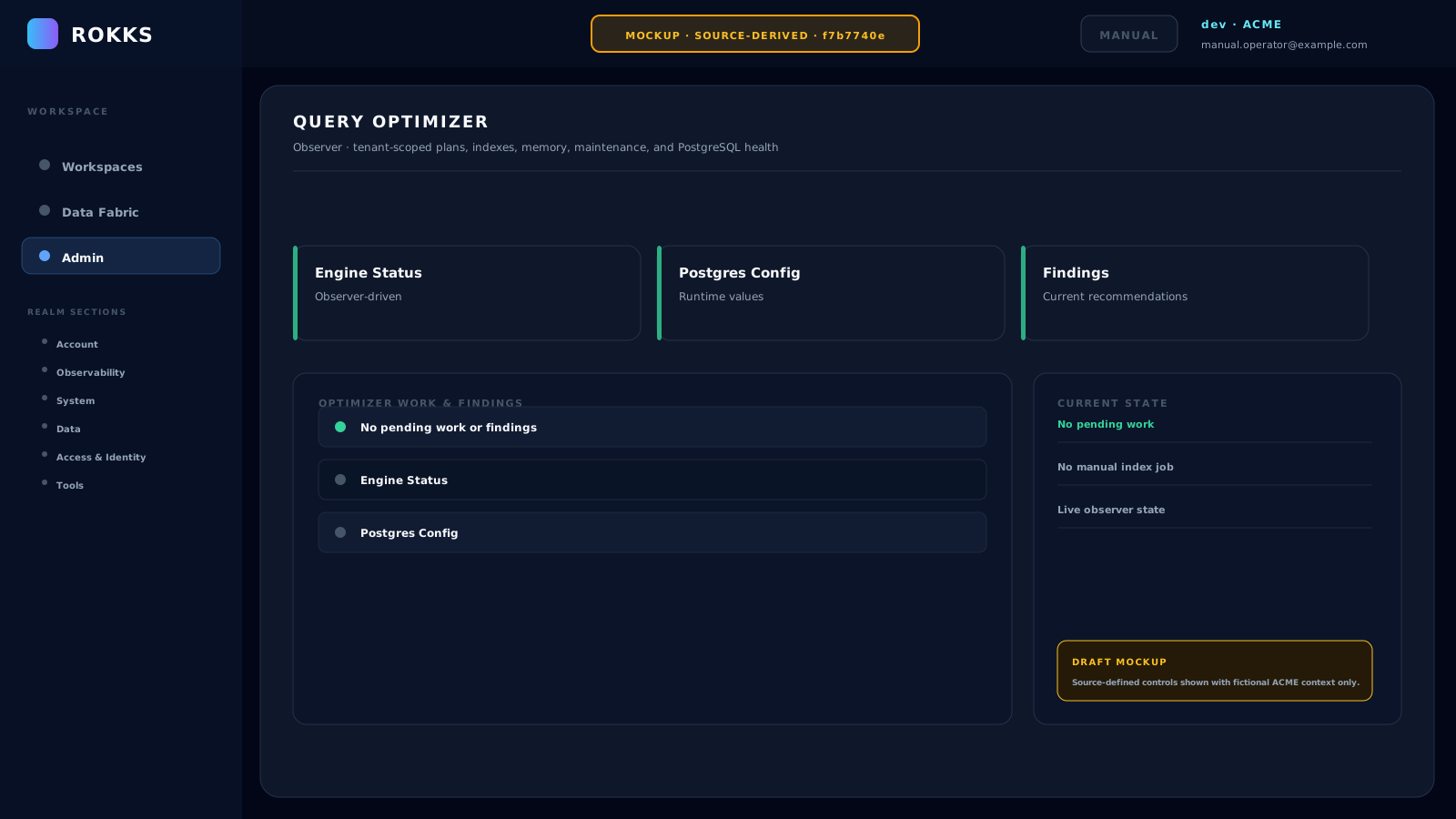
MOCKUPSource-derived illustration — not a captured product state
Step-by-step
Section titled “Step-by-step”- Capture the user action and time.
- Confirm environment and tenant.
- Check whether the source or dashboard exists in that scope.
- Open the Job Queue for related failures.
- Check Monitoring and Service Stack.
- Read the most specific error message.
- Fix the upstream cause before rerunning the workflow.
Common mistakes
Section titled “Common mistakes”Do not refresh repeatedly without checking job state. That can hide the original failure.
Do not widen permissions to “fix” missing data until scope and ownership have been confirmed.